
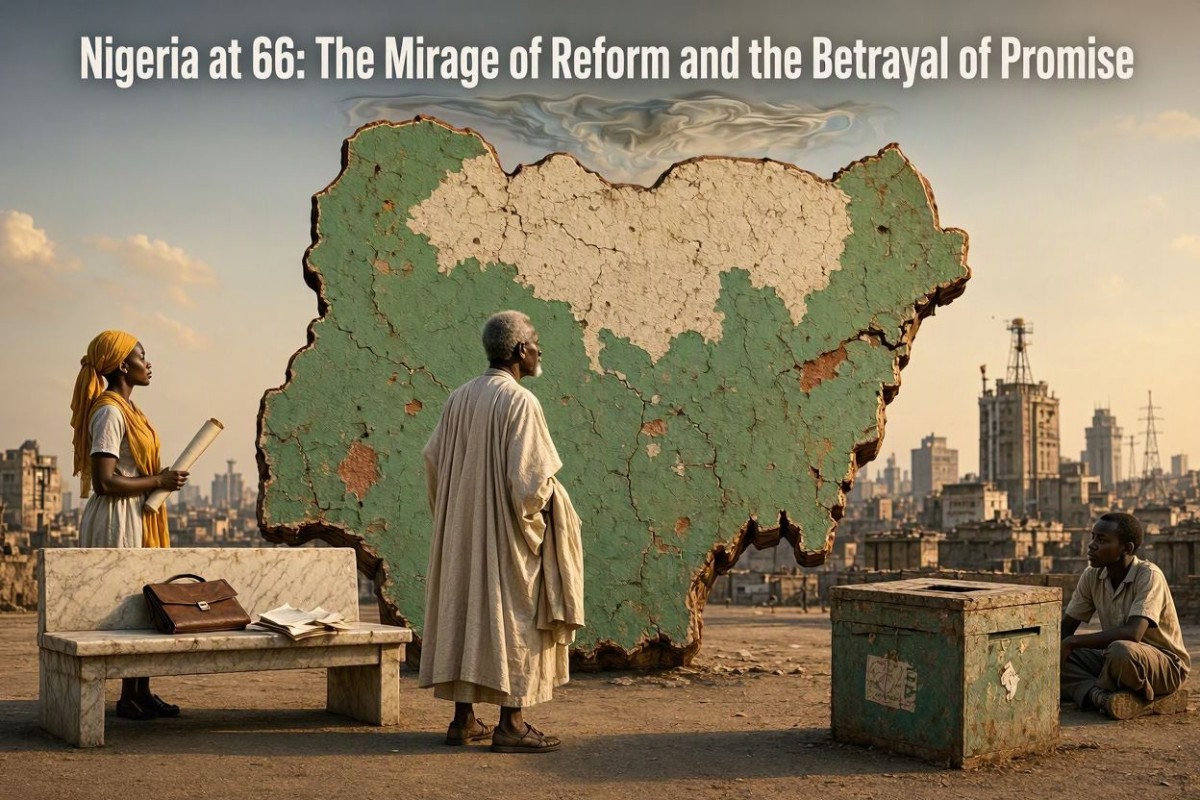
Nigeria at 66: The mirage of reform and the betrayal of promise
Sixty-six years after independence, Nigeria still clings to a dream that has been repeatedly betrayed. The promise of prosperity, dignity, and opportunity for all has been reduced to a mirage—visible from afar, but elusive when approached.

By Chuma Mmeka
Our leaders boast of reforms, statistics, and projections. They point to GDP growth, easing inflation, rising reserves, and banking recapitalisation as proof of progress. Yet, for the average Nigerian, these numbers are meaningless abstractions. What good is a 4% growth rate when families cannot afford food? What comfort is a stronger reserve when the naira remains volatile and purchasing power shrinks daily?
The removal of fuel subsidies and foreign exchange reforms were sold as painful but necessary steps. Painful, indeed—but necessary for whom? For the political class and their cronies who continue to thrive, or for the ordinary citizens who now pay more for transport, food, and basic survival? The truth is that reforms without empathy are nothing more than economic cruelty dressed in technocratic jargon.
Nigeria’s leaders have perfected the art of celebrating “macro stability” while ignoring the micro realities of hunger, joblessness, and insecurity. They promise cash transfers and agricultural interventions, but Nigerians have heard these promises before. What they see instead is widening inequality, a shrinking middle class, and a government more concerned with optics than outcomes.
Independence was meant to deliver freedom—not just from colonial rule, but from poverty, indignity, and despair. Yet, six decades on, millions remain shackled by the failures of leadership. The tragedy is not that Nigeria lacks resources or talent; it is that those entrusted with power lack the will to govern with honesty and courage.
Nigeria does not need more speeches or glossy reports. It needs leaders who understand that economic policy is not about numbers—it is about people. Until reforms translate into affordable food, reliable power, decent jobs, and security, they remain hollow victories.
At 66, Nigeria must confront an uncomfortable truth: independence gave us sovereignty, but bad governance has stolen prosperity. The time for excuses is over. Nigerians deserve more than promises—they deserve a nation that works.
What's Your Reaction?
 Like
0
Like
0
 Dislike
0
Dislike
0
 Love
0
Love
0
 Funny
0
Funny
0
 Wow
0
Wow
0
 Sad
0
Sad
0
 Angry
0
Angry
0







Comments (0)