
Nigeria at the periphery of IPv6 adoption, still vulnerable to Flaws of IPv4
Nigeria's adoption of Internet Protocol version 6 (IPv6) currently stands at about 5per cent, less than the global average of over 40per cent and Africa's average of 6per cent.

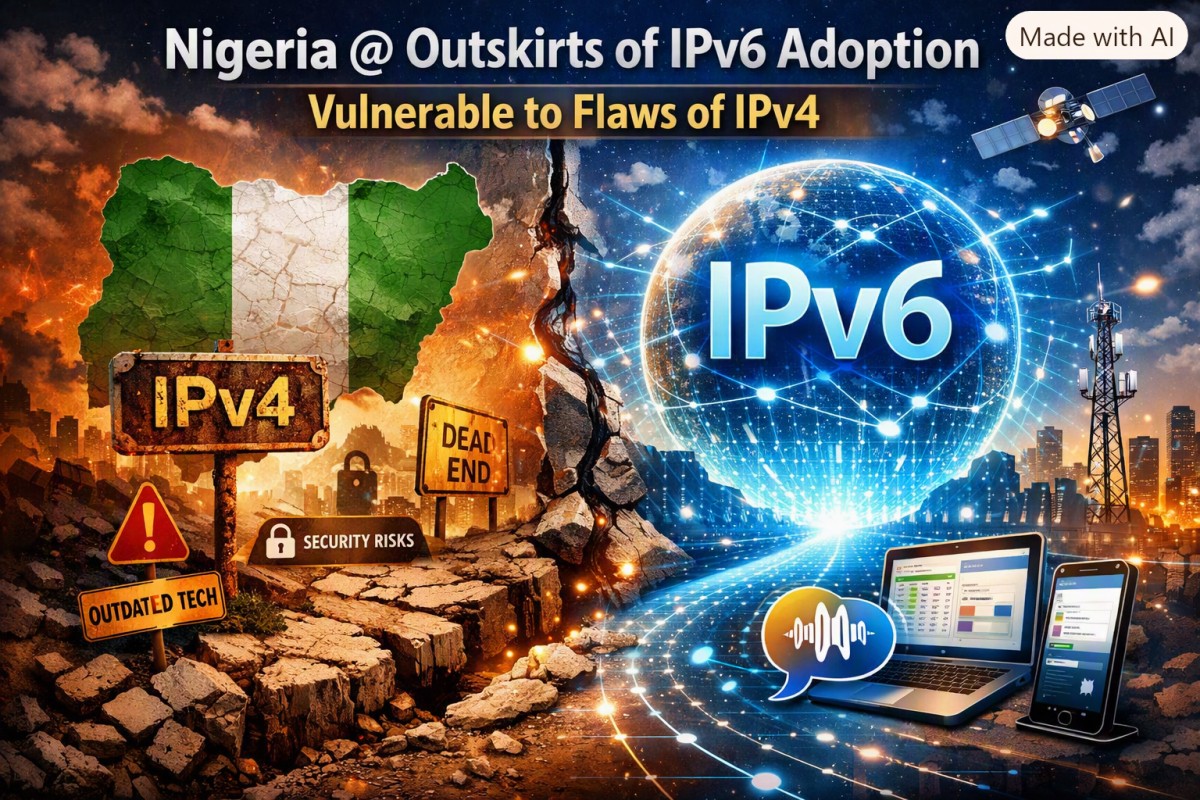
Nigeria's adoption of Internet Protocol version 6 (IPv6) currently stands at about 5per cent, trailing the global average of over 40per cent and Africa's average of 6per cent, according to findings by this reporter.
IPv6, is the newest version of the network standard that gives every device on the internet a unique address so it can send and receive data.
IPv6 exists because IPv4, the older version only offers about 4.3 billion unique addresses, which ran out as smartphones, computers, and smart devices multiplied.
This creates about 340 undecillion (3.4 × 10³⁸) unique addresses—enough for every grain of sand on Earth to have millions of IP addresses.
Risks and limitations of IPv4 include; address exhaustion, whereas the finite pool of 4.3 billion addresses has run out, forcing reliance on workarounds like Network Address Translation (NAT) that complicate network management.
Designed decades ago before modern cyber threats existed, standard IPv4 lacks built-in encryption or sender authentication, making traffic vulnerable to interception.
Also, the scarcity has made secondary markets lucrative, giving rise to route hijacking, unauthorized leasing, and using dormant legacy IP space for malicious attacks.
Exposing a public IPv4 address allows outside entities or attackers to approximate your physical geographic location and target your device directly.
IPv6 corrects all these allowing massive address space that support roughly 340 undecillion unique addresses, ensuring every phone, computer, and smart device can have its own public IP.
In IPv6, there is no need for Network Address Translation (NAT) as it restores direct end-to-end connectivity for better peer-to-peer gaming, home servers, and lower router overhead.
It also allows devices to automatically create their own local and global addresses (SLAAC), reducing manual setup and DHCP dependency. More importantly, it has better security.
What's Your Reaction?
 Like
0
Like
0
 Dislike
0
Dislike
0
 Love
0
Love
0
 Funny
0
Funny
0
 Wow
0
Wow
0
 Sad
0
Sad
0
 Angry
0
Angry
0














Comments (0)