
Too Much Light at Night: A Hidden Risk to Heart Health
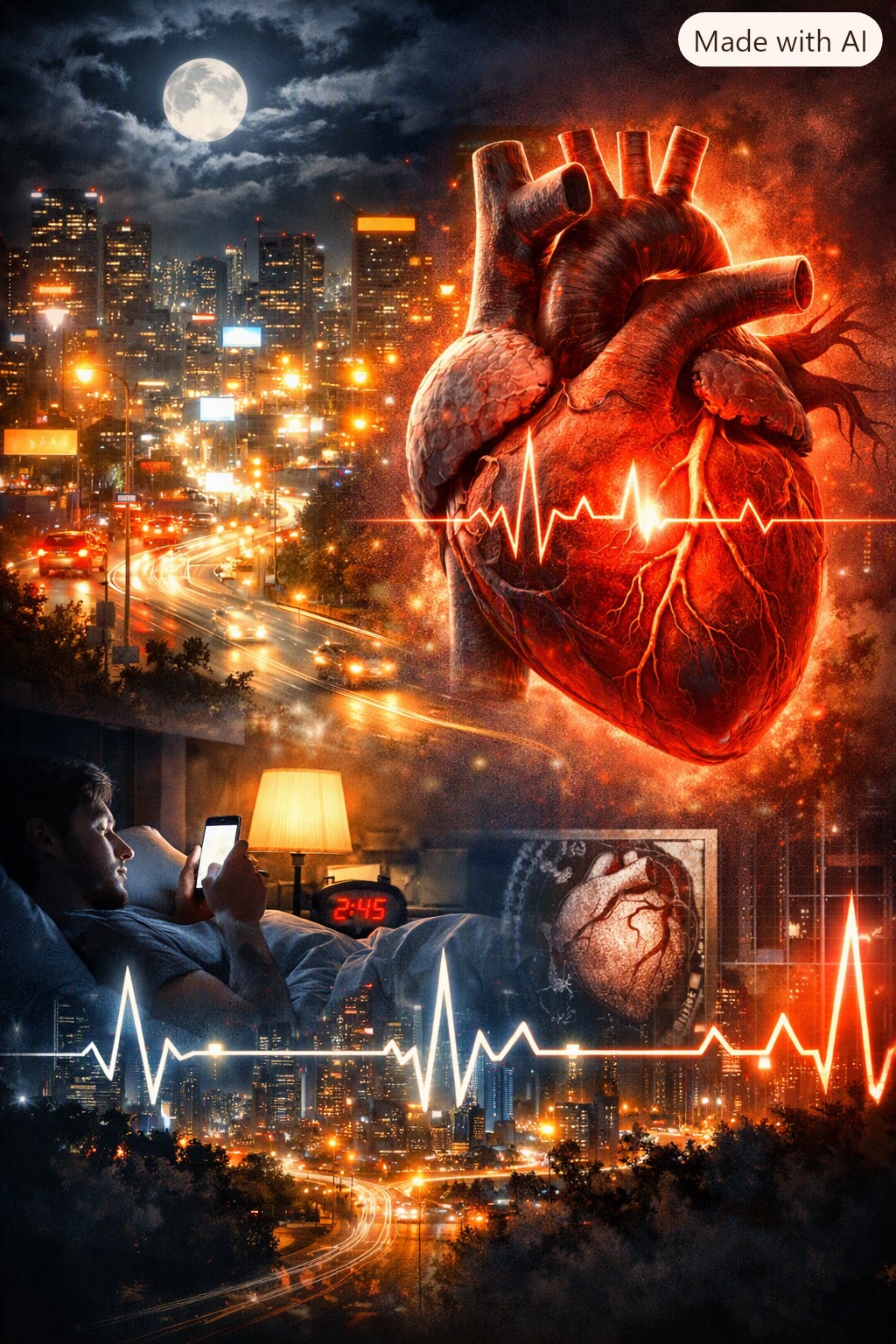
By NewsX Health Desk Artificial light has long been celebrated for extending productivity and leisure into the night. But new research warns that too much light after dark may quietly be reshaping our hearts — and not in a good way.

🔎 What the Study Found
A large-scale study published in the European Heart Journal examined more than 11,000 participants from the UK Biobank. Each wore wrist sensors to measure nighttime light exposure over seven days. Three years later, cardiac MRI scans revealed that those exposed to higher levels of light at night showed:
-
Thicker left ventricular walls — reducing the chamber’s capacity to hold blood.
-
Stiffer heart muscle — limiting the heart’s ability to flex and relax with each beat.
-
Signs of cardiac remodelling — structural changes often linked to prolonged stress and a precursor to heart failure.
Professor Lu Qi of Tulane University, who led the research, explained that while the study does not prove causation, the findings add weight to concerns that light pollution could be an emerging cardiovascular risk factor.
🩺 Expert Commentary
An editorial accompanying the study, authored by Professor Thomas Münzel of University Medical Center Mainz, Germany, urged doctors to consider patients’ nighttime light exposure when assessing cardiovascular risk. He suggested simple interventions such as:
-
Blackout curtains
-
Dimmer, warmer bedside lighting
-
Covering bright standby LEDs on electronics
🌆 Beyond the Bedroom
The issue extends far beyond personal sleep environments. Modern cities remain illuminated long after sunset, with streetlights, billboards, and vehicle headlights contributing to constant exposure. Experts argue that urban planning could help mitigate risks by adopting shielded fixtures, warmer-spectrum bulbs, and motion-activated streetlights.
🛑 What This Means for You
While further research is needed to confirm whether reducing nighttime light can directly prevent heart disease, the advice for individuals is clear:
-
Switch off unnecessary lights.
-
Draw the curtains.
-
Put away glowing screens before bed.
These small steps may help protect your heart while scientists continue to investigate the long-term effects of our increasingly illuminated nights.
NewsX.ng will continue to monitor developments in this emerging field of cardiovascular research. As the world grows brighter, the question remains: what happens to the human heart when the night never truly falls?
What's Your Reaction?
 Like
0
Like
0
 Dislike
0
Dislike
0
 Love
0
Love
0
 Funny
0
Funny
0
 Wow
0
Wow
0
 Sad
0
Sad
0
 Angry
0
Angry
0















Comments (0)