
Misuse of Activism in Nigeria...CSOs’ involvement in human trafficking raises the question of oversight
There is a new trend in human trafficking and Civil Society Organisation (CSO) actors are the drivers, says the National Agency for the Prohibition of Trafficking in Persons (NAPTIP). According to the agency, some CSOs now serve as conduits for trafficking in young persons sourced from vulnerable communities.

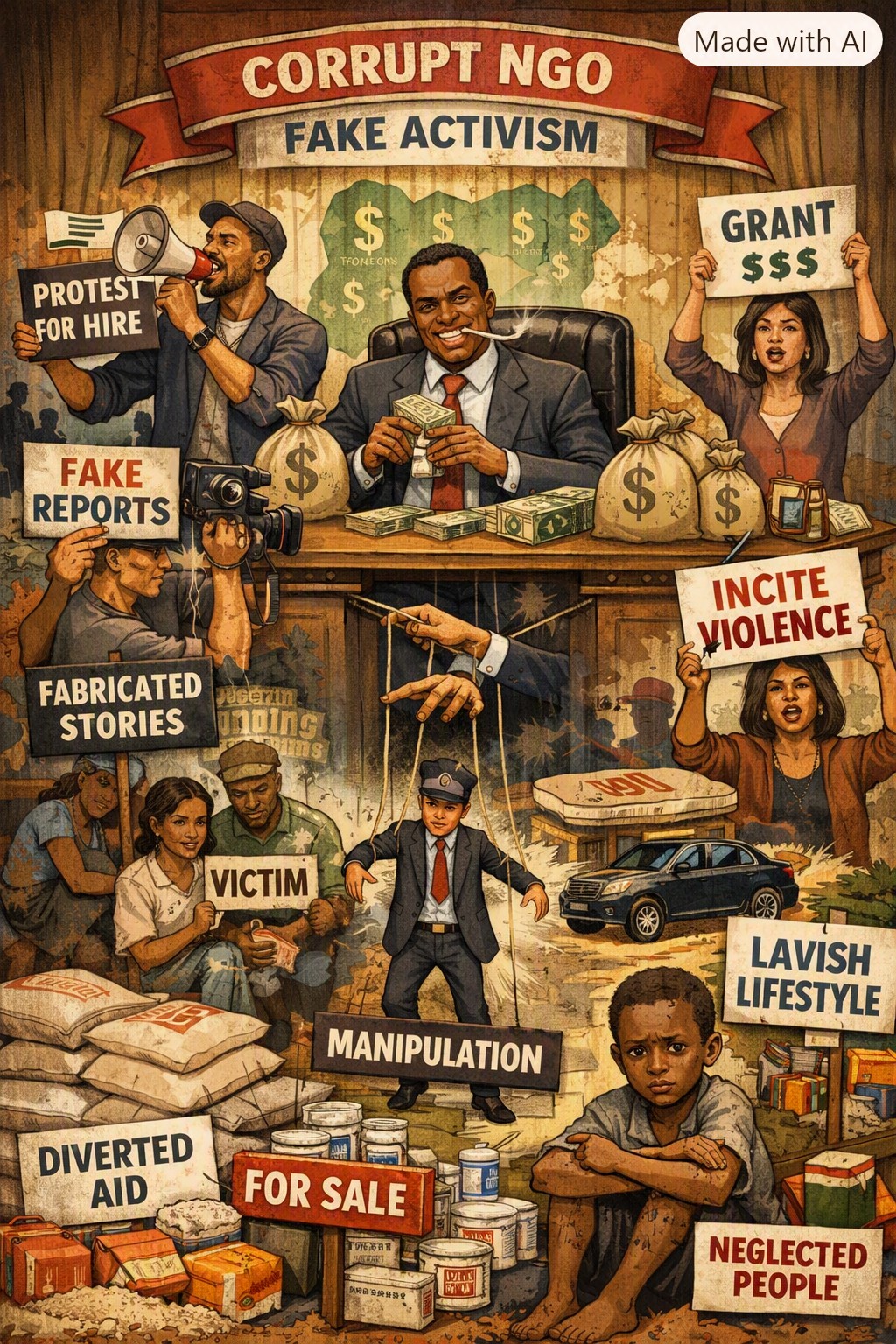
They reportedly deceive community people with promises of assistance for the young ones and when people release the children to them, they sell the youngsters into child slavery.
Addressing a joint briefing by security spokespersons in Abuja early this week, Head of Press and Public Relations at NAPTIP, Vincent Adekoye, said human traffickers had shifted attention to targeting young males (as against females who used to be the target). He indicated plans to profile CSOs, including faith-based non-governmental organisations operating in communities ravaged by farmer-herder clashes.
“We want to alert Nigerians to this gender shift in human trafficking and its technology-driven, cyber-enabled nature. Through our operations, we discovered that traffickers are now masquerading under the umbrella of Civil Society Organisations and moving to distressed communities where you have farmer-herder crises, and promising parents they will take their children back to school under a fake back-to-school project,” Adekoye said. “And from there, they harvest children. Just about two weeks ago in an operation we carried out in Onitsha, Anambra State, we recovered four children who were trafficked from Kajuru in Kaduna in 2023,” he added.
According to the NAPTIP spokesman, the agency recovered some of the children from a high-rise building, and one was recovered from a nurse at a Federal Medical Centre in Onitsha. “We want to profile Civil Society Organisations in Nigeria. My Director-General has asked me to convey to the leadership of the CSOs that they should do an in-house cleansing. Because these are people who are known to the communities. Some of them are community-based organisations, faith-based organisations and non-governmental organisations,” he said.
“The people are familiar with them, so they take advantage of the vulnerability of the community – those who have been ravaged already – and they walk up to them and take the children away,” Adekoye further noted, adding: “At last count, we have recovered 180 of such children from those that were trafficked from Nasarawa and Benue, and from three other states within the North-Central. So, we are appealing to Nigerians to be watchful. When you see them, please contact NAPTIP.”
The agency official also spoke about a new trend by which human traffickers have moved to the cyberspace in recruiting victims to Asian countries for hard labour. He said NAPTIP recently rescued from Thailand 16 young boys who were lured with lucrative job offers.
“We have other countries around the Asian corridor, and what is the promise? The promise is that they will earn a good living. And for those of them who have been without a job for a while, it’s a golden opportunity. Some of them even testified that they got the job and were offered everything – from issuance of the travel documents and transportation to VIP treatment on arrival at the destination country.” He added: “At the beginning, it would look so real that they would have no reason to doubt. But the agency has been inundated with calls from some of them who are stranded. In July alone, we rescued about 16 of them from Thailand.”
The reported role of CSOs again raises the hot-button question of regulatory oversight. Under the existing framework, the organisations are primarily regulated through incorporation and governance requirements under the Companies and Allied Matters Act (CAMA) overseen by the Corporate Affairs Commission (CAC). Every attempt at adding extra layers of oversight has been deemed targeted at constricting the civic space and has been accordingly resisted.
Presently stuck in the legislative mill is the Foreign Aids (Regulation, Transparency and Disclosure) Bill 2026 proposed by the National Assembly. Whereas the legislation is avowedly aimed at monitoring receipt and application of foreign grants by CSOs and other entities, CSOs have fiercely pushed back, arguing that it threatens their independence and duplicates oversight already provided by CAMA and the CAC.
Way back in 2020, the House of Representatives indefinitely withdrew a proposed bill to establish a Civil Society Organisation (CSO) Regulatory Commission. Leading the debate on the bill, then, Abbas Tajudeen, argued that establishing such commission would address the challenges of co-ordination among CSOs owing to lack of a dedicated regulatory framework.
We have always argued for civic freedom, but we also insist that such freedom comes with a heavy burden of responsibility because, from whom much is given, much is expected. Under the present framework, the CAC needs to be strengthened in exercising due diligence over CSOs; but it must be noted that these are not the only entities it is involved with.
nd so, there is need for dedicated oversight on CSOs. If operators are so averse to externally generated framework, they could articulate their own framework for self-governance and process through statutory channels. But it isn’t in the interest of our collective security that any sector of society should be without oversight.
What's Your Reaction?
 Like
0
Like
0
 Dislike
0
Dislike
0
 Love
0
Love
0
 Funny
0
Funny
0
 Wow
0
Wow
0
 Sad
0
Sad
0
 Angry
0
Angry
0












Comments (0)